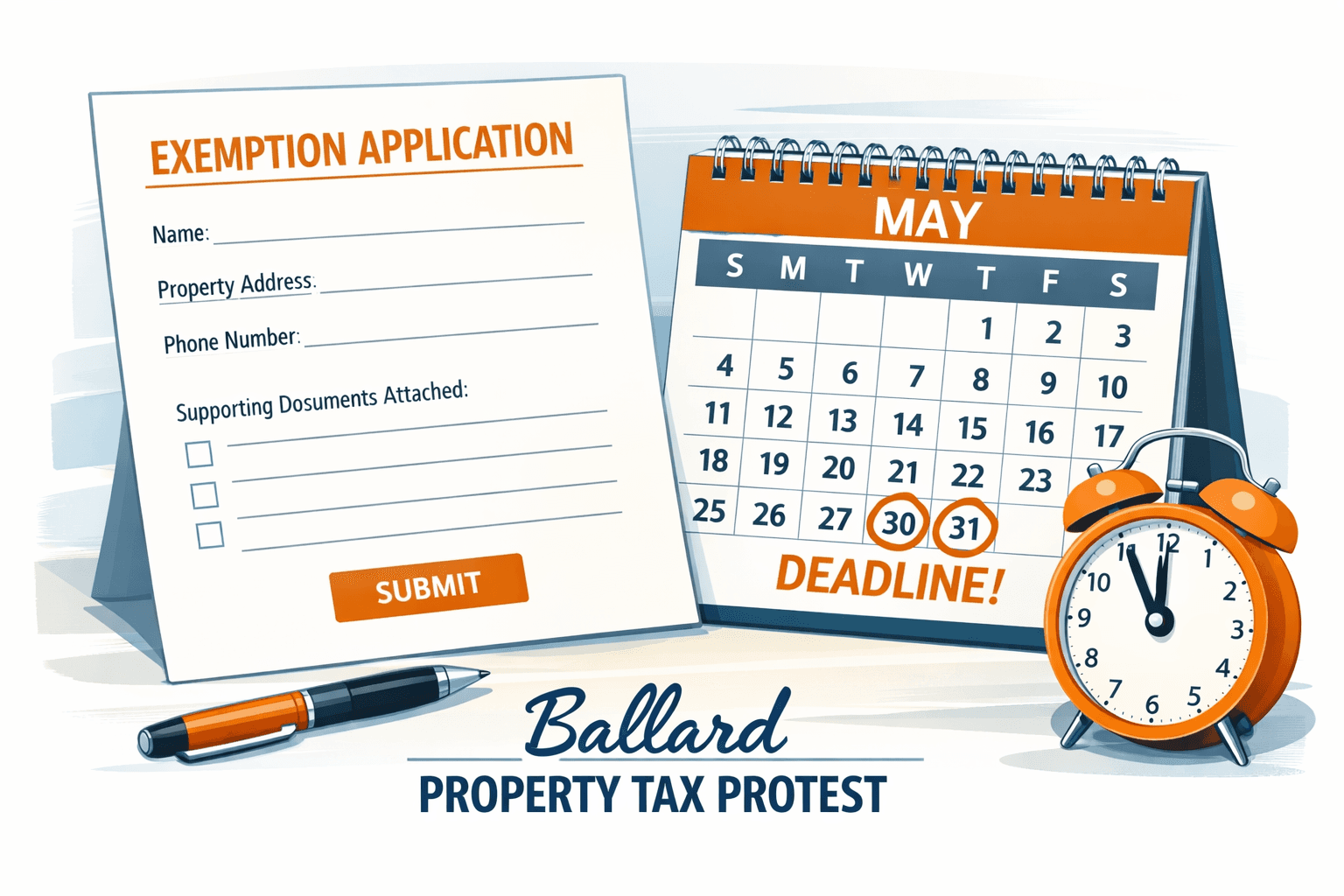
What to Write on a Property Tax Protest Form in Texas
On your property tax protest form, check "Value is over market value" and "Value is unequal compared with other properties" as your protest reasons. In the description field, keep it brief and factual - a sentence or two about why the value is wrong. You don't need to write a detailed letter. The form gets you in the door; your evidence is what wins the hearing.
If you're staring at the protest form wondering what to put in each field, you're not alone. Thousands of Texas homeowners file protests every year, and the form itself is simpler than most people expect. Here's a step-by-step breakdown of what to write, what to check, and what to avoid.
The Texas Property Tax Protest Form (Form 50-132)
The official protest form is Form 50-132 - Property Owner's Notice of Protest - published by the Texas Comptroller. Most counties also have their own version available through their appraisal district website or online protest portal, but the content is essentially the same.
The form has four main sections:
- Property owner information - your name, address, phone number, email
- Property identification - property address, account number, legal description
- Reason for protest - checkboxes and a description field (this is the important part)
- Hearing preferences - how you want to attend (in person, phone, video)
You'll also sign, date, and submit the form to your county appraisal district - not to the Texas Comptroller.
Section 3: Choosing Your Protest Reason(s)
This is the section that matters most. The boxes you check determine what evidence you're allowed to present and what appeal rights you preserve. Check the wrong box (or forget one), and you may not be able to argue a point at your hearing.
The Two Boxes You Should Almost Always Check
For the vast majority of residential protests, check both of these:
Box 1: "The appraised (market) value of my property is incorrect"
This means you believe the appraisal district's value is too high - your home wouldn't actually sell for the amount they've assessed. This is the market value argument.
Box 2: "The appraised value of my property is unequal compared with other properties"
This means your home is appraised higher than similar properties in the district's own records - even if the market value might be accurate. This is the unequal appraisal (equity) argument.
Check both. They allow you to present different types of evidence and give you maximum flexibility at the hearing. You can always drop one argument later, but you cannot add a new reason after you've filed.
Other Boxes You Might Check
Depending on your situation, other protest grounds on the form include:
- "The property should not be taxed in this jurisdiction" - if you believe the property is in the wrong appraisal district or taxing unit
- "An exemption or special appraisal was denied, modified, or canceled" - if your homestead exemption, ag exemption, or other exemption was incorrectly handled
- "The property description is incorrect" - wrong square footage, lot size, or features listed in the appraisal records
- "The appraisal district failed to send required notice" - if you didn't receive your appraisal notice
Check every box that applies to your situation. It costs nothing to check an extra box, and it protects your rights.
What to Write in the Description / Reason Field
Most protest forms include a text field where you can explain your protest in your own words. This is where many homeowners overthink it. Keep it short, factual, and specific.
The description field is not a legal brief. It's not a letter to the appraisal district. It's a brief statement that supports the boxes you checked. One to three sentences is enough.
Template Language for Market Value Protests
Use or adapt these examples based on your situation:
If your value jumped significantly:
"The appraised value increased [X]% this year, which exceeds the actual market value of my property. Comparable sales in my neighborhood support a value of approximately $[amount]."
If you have condition issues:
"The appraised value does not reflect the current condition of my property, which requires significant repairs including [roof replacement / foundation repair / HVAC replacement]. I will provide contractor estimates and photos as evidence."
If you recently purchased for less than the appraised value:
"I purchased this property on [date] for $[amount], which is below the current appraised value of $[amount]. The purchase was an arm's-length transaction on the open market."
If comparable sales support a lower value:
"Recent comparable sales in my area support a market value below the current appraisal. I will present adjusted comparable sales at the hearing."
Template Language for Unequal Appraisal Protests
If similar homes are appraised lower:
"My property is appraised higher than comparable properties in my neighborhood of similar size, age, and condition. I will present appraisal district records for comparable properties that demonstrate unequal treatment."
If you're in a subdivision with identical homes:
"My home is the same floor plan, square footage, and age as neighboring properties that are appraised at $[amount] to $[amount], yet my property is appraised at $[your value]. The appraisal is unequal."
Template for Both (Recommended)
"The appraised value of $[amount] exceeds the market value of my property based on comparable sales, and is also unequal compared to similar properties in the appraisal district's records. I will present evidence of both at the hearing."
This single sentence covers both grounds and signals to the appraiser that you have evidence prepared.
What to Put for "Opinion of Value"
The form usually asks: "I believe the value of my property should be $______."
This field is optional, but filling it in is helpful. Use a number that's supported by your evidence - the average of your comparable sales adjustments or the value indicated by your comps. Don't lowball without justification, and don't leave it blank if you have a well-supported number.
If you're not sure, it's fine to leave it blank and present your number at the hearing instead.
What NOT to Write
The description field is not the place for emotional appeals, complaints about tax rates, or threats. Here's what to avoid:
Don't write about tax rates or your tax bill amount. The protest hearing is about your property's appraised value, not the tax rate. The ARB has no control over tax rates - they can only adjust your value.
Bad: "My property taxes are too high and I can't afford them."
Don't make it personal or emotional.
Bad: "This is unfair and the appraisal district is trying to take advantage of homeowners."
Don't threaten legal action on the form.
Bad: "I will sue if this isn't corrected."
Don't write a multi-page letter. The form is a filing document, not your hearing presentation. Save the detailed arguments for the hearing itself.
Don't reference your neighbor's tax bill. Other owners' tax amounts aren't relevant - their appraised values are.
Don't mention personal financial hardship. The ARB determines fair market value. They can't lower your value because of income, medical bills, or other personal circumstances (though separate programs like tax deferrals exist for qualifying homeowners).
Online Filing vs. Paper Form
Most Texas counties now offer online protest filing through their appraisal district website. The online forms ask the same questions as Form 50-132 but may have slightly different formatting.
Tips for Online Filing
- Take a screenshot or save a PDF of your submission as confirmation
- Note any confirmation number or email receipt
- Upload supporting documents if the portal allows it (some don't accept uploads until closer to the hearing)
- Check that your email address is correct - hearing notices may come electronically
Tips for Paper Filing
- Mail the form to the county appraisal district (not the Comptroller)
- Send it certified mail or with delivery confirmation so you have proof of the filing date
- Keep a copy of everything you submit
- Don't attach all your evidence to the form - bring that to the hearing
The Form Gets You In - Evidence Wins It
The most important thing to understand about the protest form is that it's just the entry ticket. What you write on it matters far less than the evidence you bring to the hearing.
A perfectly worded form with no evidence will lose. A poorly worded form with strong comparable sales and condition documentation will win.
What Actually Wins Protests
- Adjusted comparable sales - 3 to 5 recent sales of similar properties, adjusted for differences in size, condition, and features. See: How to Find Comparable Sales for Tax Protests
- Unequal appraisal data - appraisal district records showing similar homes appraised lower than yours
- Condition documentation - dated photos of damage, deferred maintenance, or needed repairs
- Contractor estimates - written bids for roof, foundation, HVAC, or other major repairs
- Independent appraisal or CMA - a formal appraisal or comparative market analysis from a licensed appraiser or real estate agent
For a full walkthrough of the protest process from filing to hearing, see: How to File a Texas Property Tax Protest (2026 Guide).
Common Mistakes on the Protest Form
Avoid these errors that can hurt your case before it even starts:
Filing after the deadline. The deadline is May 15 or 30 days after your appraisal notice is delivered, whichever is later. Miss it and you lose your right to protest for the year (with limited exceptions). For more on common pitfalls, see: Top Mistakes When Protesting Texas Property Taxes.
Only checking one box. If you only check "market value" but your strongest evidence is an equity comparison, you may not be allowed to present it. Check both.
Wrong property account number. Double-check the account number from your appraisal notice. A wrong number can delay or invalidate your protest.
Not signing the form. An unsigned form is not valid. Make sure you sign and date before submitting.
Filing with the wrong office. Submit to your county appraisal district, not the tax assessor's office, not the Comptroller, and not the ARB directly.
A Quick Checklist Before You Submit
- Property account number matches your appraisal notice
- Your name and contact information are correct
- You checked both "market value" and "unequal appraisal" boxes (plus any others that apply)
- You wrote a brief, factual description (1–3 sentences)
- You included your opinion of value (optional but recommended)
- You selected your hearing preference (in person, phone, or video)
- You signed and dated the form
- You kept a copy for your records
- You filed before the deadline (May 15 or 30 days after notice)
Other Forms You May Need
Form 50-132 is the only form required to file a protest, but three other forms come up frequently during the process.
Quick Reference
| Form | Name | When You Need It |
|---|---|---|
| 50-132 | Notice of Protest | To file a property tax protest (required) |
| 50-162 | Appointment of Agent | To authorize someone else to represent you |
| 50-283 | Affidavit of Evidence | To submit evidence without attending your hearing |
| 50-114 | Homestead Exemption Application | To apply for a homestead exemption on your primary residence |
All forms are available on the Texas Comptroller's website and your county appraisal district's website.
Form 50-162: Appointment of Agent
This form authorizes another person to act on your behalf during the protest process. You need it if you hire a property tax protest company, ask an attorney to handle your case, or want someone else to attend the hearing for you.
Key details:
- Your appointed agent can attend hearings, present evidence, negotiate settlements, and file appeals
- The form is valid for the current tax year only - a new one is needed each year
- Submit it with or before the Notice of Protest so the agent can act immediately
- You can revoke the appointment at any time by submitting a written revocation
If you hire a company like Ballard Property Tax Protest, they will provide a pre-filled 50-162 for you to sign and handle submission to the appraisal district.
Form 50-283: Affidavit of Evidence
This form allows you to submit evidence and written testimony to the ARB without attending the hearing. The ARB reviews your affidavit alongside the appraisal district's evidence and makes a decision.
Use it when you cannot attend in person or remotely. Write a clear, factual statement explaining why your value should be lower, reference your evidence (comparable sales, condition photos, repair estimates), and attach supporting documents.
Limitation: Submitting by affidavit means you cannot respond to the appraisal district's arguments or answer questions from the ARB panel. Attending the hearing is generally more effective when possible.
Most appraisal districts require the affidavit at least 14 days before your scheduled hearing date.
Form 50-114: Homestead Exemption Application
The homestead exemption is separate from the protest process, but every Texas homeowner should have one. It provides:
- $100,000 off your school district taxable value
- Additional exemptions from many counties and cities (typically 10-20% of appraised value)
- 10% annual cap on appraised value increases
- Additional exemptions for over-65, disabled, and disabled veteran homeowners
To qualify, you must own and occupy the property as your primary residence and have a Texas driver's license or state ID showing the property address. The standard deadline is April 30, but late filing is allowed up to two years after the delinquency date.
If you haven't filed for a homestead exemption yet, do it at the same time as your protest. The exemption reduces your taxable value, and the protest reduces your appraised value. Together, they provide the maximum possible tax savings.
For a complete overview, see our Texas homestead exemption guide.
Where to Get Forms and File
Most county appraisal districts have online portals where you can file protests and exemption applications without downloading paper forms:
| County | Appraisal District Website |
|---|---|
| Harris | hcad.org |
| Dallas | dallascad.org |
| Tarrant | tad.org |
| Bexar | bcad.org |
| Travis | traviscad.org |
| Collin | collincad.org |
| Fort Bend | fbcad.org |
| Denton | dentoncad.com |
| Montgomery | mcad-tx.org |
| Williamson | wcad.org |
| Hays | hayscad.com |
| Comal | comalad.org |
| Bell | bellcad.org |
| Galveston | galvestoncad.org |
| Brazoria | brazoriacad.org |
| Ellis | elliscad.com |
| Kaufman | kaufman-cad.org |
| Rockwall | rockwallcad.com |
Skip the Form - Let Us Handle It
If you'd rather not deal with the paperwork, deadlines, and hearing preparation, Ballard Property Tax Protest handles everything - from filing your protest to presenting evidence at the hearing. You don't attend, and you only pay if we save you money.
For more on whether to DIY or hire a professional, see: Filing Your Own Property Tax Protest in Texas.