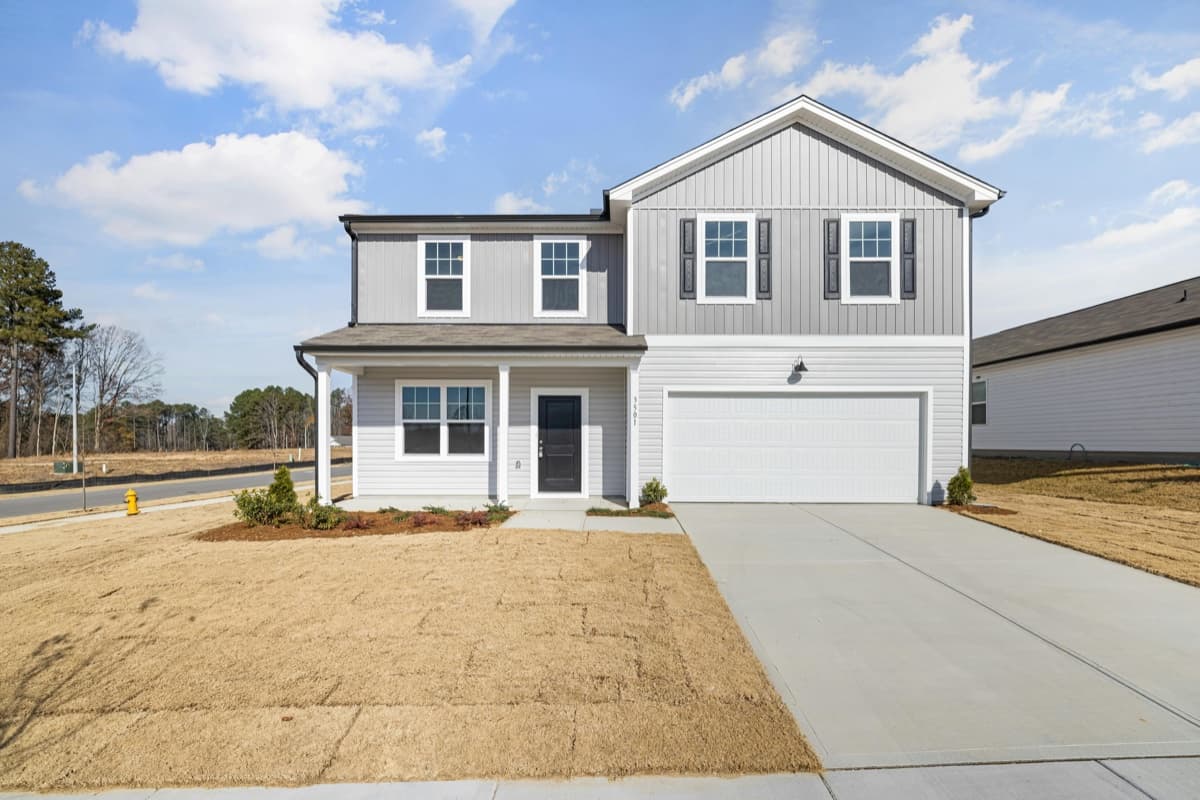
Fort Bend County Unequal Appraisal Explained
If you own property in Fort Bend County, you have a powerful tool to reduce your property taxes that many homeowners overlook: the unequal appraisal protest. While most property owners focus on arguing that their appraised value exceeds market value, unequal appraisal offers a different approach that can be even more effective.
Here is what you need to know:
- What unequal appraisal means under Texas law
- How it differs from market value protests
- How to identify if your property is unequally appraised
- Finding comparable properties for your case
- How FBCAD handles unequal appraisal protests
- When to use unequal appraisal vs. market value approach
- Evidence needed for a successful protest
For the complete Fort Bend County protest process, see our Fort Bend County property tax protest guide.
What Is Unequal Appraisal in Texas?
Unequal appraisal occurs when your property is assessed at a higher value relative to similar properties than it should be under uniform assessment practices. The Texas Constitution requires that taxation be "equal and uniform," meaning similar properties should be assessed at similar values.
Under Texas Tax Code Section 42.26, you can challenge your property's assessed value if it exceeds:
- The median level of appraisal of a reasonable sample of other properties in the appraisal district by at least 10%
- The median level of appraisal of a sample of similarly situated properties by at least 10%
- The median appraised value of a reasonable number of comparable properties, appropriately adjusted
The third option is most commonly used by Fort Bend County homeowners because it focuses on comparing your property directly to similar homes in your area.
The Constitutional Foundation
The Texas Constitution mandates equal and uniform taxation. Texas courts have consistently ruled that when market value and equal appraisal conflict, equal and uniform taxation must prevail. This means even if your property's assessed value accurately reflects market value, you may still be entitled to a reduction if similar properties are assessed lower.
Unequal Appraisal vs. Market Value Protests: Key Differences
Understanding the difference between these two protest approaches is essential for building an effective case.
Market Value Protests
In a market value protest, you argue that your property's assessed value exceeds what it would sell for on the open market.
Key characteristics:
- Based on recent sales prices of similar properties
- Compares your assessed value to actual sale prices
- Effective when your property is genuinely overvalued
- Requires evidence of what similar homes sold for
Example: Your home is assessed at $450,000, but similar homes in your neighborhood recently sold for $400,000-$420,000.
Unequal Appraisal Protests
In an unequal appraisal protest, you argue that your property is assessed higher than similar properties, regardless of what those properties are actually worth.
Key characteristics:
- Based on assessed values of similar properties (not sales prices)
- Compares your assessed value to other assessed values
- Effective even when your property is assessed below market value
- Requires evidence of how similar homes are assessed
Example: Your home is assessed at $450,000, but similar homes in your neighborhood are assessed at $380,000-$410,000, even though all of these homes might be worth $500,000 on the open market.
Why Unequal Appraisal Can Be More Powerful
Unequal appraisal is often the most effective strategy for Fort Bend County homeowners because:
- It works even when values are below market - If your property is assessed at $400,000 but similar properties are assessed at $350,000, you may be entitled to a reduction even if your property would sell for $450,000
- Mass appraisal creates inconsistencies - FBCAD uses computer-assisted mass appraisal that often values similar properties differently
- Easier to prove - You only need to show what similar properties are assessed at, not what they would sell for
How to Identify If Your Fort Bend County Property Is Unequally Appraised
Before filing a protest, determine whether your property qualifies for an unequal appraisal argument.
Step 1: Review Your Notice of Appraised Value
Your annual Notice of Appraised Value from FBCAD shows:
- Your property's proposed market value
- Prior year assessed value
- Property characteristics on record (square footage, year built, etc.)
Step 2: Research Comparable Properties
Use the FBCAD property search at www.fbcad.org to find similar properties in your area.
Look for properties that match:
- Same neighborhood or subdivision
- Similar square footage (within 10-15%)
- Comparable age (within 5-10 years)
- Same construction type and quality
- Similar lot size
- Comparable condition
Step 3: Compare Assessed Values
Calculate the price per square foot of assessed value for your property and comparable properties:
| Property | Assessed Value | Square Feet | Price/SF |
|---|---|---|---|
| Your home | $450,000 | 2,400 | $187.50 |
| Comp 1 | $380,000 | 2,350 | $161.70 |
| Comp 2 | $395,000 | 2,500 | $158.00 |
| Comp 3 | $405,000 | 2,420 | $167.36 |
In this example, your home is assessed at $187.50/SF while similar homes average $162.35/SF - a potential sign of unequal appraisal.
Step 4: Calculate the Median
Texas law focuses on the median appraised value of comparable properties, not the average. The median is the middle value when properties are arranged in order.
If you have five comparable properties with adjusted values of: $365,000, $380,000, $395,000, $405,000, $420,000
The median is $395,000 (the middle value).
Finding Comparable Properties for Your Fort Bend County Unequal Appraisal Case
Strong comparable properties are essential for a successful unequal appraisal protest. Here's how to find them.
Where to Find Comparable Property Data
FBCAD Property Search: Visit www.fbcad.org and use the property search function to look up assessed values for properties in your neighborhood.
Neighborhood Code or Market Area: Properties in the same neighborhood code or market area carry the most weight. FBCAD groups properties into market areas for appraisal purposes.
HB201 Evidence Package: Under Texas law, you can request FBCAD's evidence package at least 14 days before your hearing. This package often includes comparable properties FBCAD used in their analysis.
Characteristics of Strong Comparables
When selecting comparable properties, prioritize these factors:
| Factor | Importance | Notes |
|---|---|---|
| Location | Critical | Same subdivision or neighborhood ideal |
| Square footage | Very high | Within 10-15% of your home |
| Year built | High | Within 5-10 years preferred |
| Construction quality | High | Similar grade and materials |
| Lot size | Moderate | Similar acreage or lot dimensions |
| Number of stories | Moderate | Compare single-story to single-story |
| Pool/upgrades | Moderate | Account for major improvements |
How Many Comparables Do You Need?
Texas law requires a "reasonable number" of comparable properties but doesn't specify an exact count. In practice:
- Minimum: 3-5 comparable properties
- Recommended: 5-10 comparable properties
- More is better when properties are closely matched
Having too few comparables weakens your case. Having more demonstrates a pattern of unequal assessment.
Adjusting Comparable Properties
Texas law requires comparables to be "appropriately adjusted" to account for differences. Common adjustments include:
- Square footage: Adjust value based on size differences
- Age: Newer homes typically warrant higher values
- Condition: Account for superior or inferior condition
- Lot size: Larger lots may justify higher values
- Features: Add or subtract for pools, garages, etc.
Example adjustment: Your home: 2,400 SF, no pool Comparable: 2,600 SF, pool assessed at $395,000
Adjusted comparable value:
- Size adjustment: -$15,000 (200 SF difference)
- Pool adjustment: -$25,000
- Adjusted value: $355,000
How FBCAD Handles Unequal Appraisal Protests
Understanding how the Fort Bend Central Appraisal District processes unequal appraisal protests helps you prepare effectively.
Filing Your Protest
When filing your protest with FBCAD, select both grounds:
- Value exceeds market value
- Value is unequal compared with other properties
Checking both boxes preserves your options and allows you to present the widest range of evidence.
The Informal Review Process
After filing, FBCAD schedules an informal review with an appraiser before any formal hearing. During this meeting:
- Present your comparable properties and adjusted values
- Show the median appraised value of your comparables
- Explain why your property should be assessed at the median
- Negotiate a settlement value
Many Fort Bend County protests are resolved at the informal stage. Strong unequal appraisal evidence often leads to favorable settlements.
ARB Hearing Procedures
If informal review doesn't resolve your protest, FBCAD schedules a hearing before the Appraisal Review Board (ARB). For unequal appraisal cases:
- Present your comparable properties in a clear matrix or table format
- Show property addresses, assessed values, and key characteristics
- Calculate and present the median value of adjusted comparables
- Explain your adjustments and methodology
The ARB evaluates whether your property is assessed unequally compared to similar properties.
When to Use Unequal Appraisal vs. Market Value Approach
Choosing the right protest strategy depends on your specific situation.
Use Unequal Appraisal When:
- Similar properties in your area are assessed lower than yours
- Your property is assessed at or below market value, but higher than comparable assessments
- Recent sales in your area support higher values than your assessment (making market value arguments weak)
- FBCAD's mass appraisal model has created inconsistencies in your neighborhood
- You have access to assessed value data for comparable properties
Use Market Value When:
- Your property is genuinely overvalued compared to recent sales
- You have strong evidence of recent comparable sales below your assessed value
- Recent appraisals show your property is worth less than the assessed value
- Property condition issues reduce your home's market value
Use Both Approaches Together
The most effective strategy is often to file on both grounds and present evidence for each:
- Primary argument: Unequal appraisal based on comparable assessed values
- Secondary argument: Market value based on comparable sales
This dual approach gives you flexibility during negotiations and hearings.
Evidence Needed for a Successful Unequal Appraisal Protest
Strong evidence is the foundation of a winning protest. Here's what to gather for your Fort Bend County unequal appraisal case.
Essential Evidence
1. Comparable Property Data
- Property addresses and account numbers
- Assessed values from FBCAD records
- Square footage, year built, lot size
- Property characteristics (bedrooms, bathrooms, garage, pool)
2. Adjustment Calculations
- Clear methodology for adjusting comparables
- Documentation supporting adjustment amounts
- Final adjusted values for each comparable
3. Median Value Calculation
- List of adjusted comparable values in order
- Clearly identified median value
- Comparison of your assessed value to the median
4. Property Characteristics Documentation
- Your property's FBCAD record card
- Any errors in recorded characteristics
- Photos documenting condition issues (if applicable)
Presenting Your Evidence
Organize your unequal appraisal evidence in a matrix or table format for maximum impact:
| Address | Assessed Value | SF | Year | Lot Size | Adjustments | Adjusted Value |
|---|---|---|---|---|---|---|
| 123 Oak St | $385,000 | 2,380 | 2018 | 8,500 | +$5,000 | $390,000 |
| 456 Elm Ave | $392,000 | 2,450 | 2016 | 8,200 | -$3,000 | $389,000 |
| 789 Pine Ln | $378,000 | 2,320 | 2019 | 8,800 | +$8,000 | $386,000 |
| Median | $389,000 | |||||
| Your Home | $425,000 | 2,400 | 2017 | 8,400 | - | - |
This format clearly shows the ARB that your property is assessed above the median of similar properties.
Documents to Bring to Your Hearing
Prepare four copies of all evidence for your ARB hearing:
- One for you
- One for FBCAD
- Two for ARB panel members
Include:
- Comparable property matrix with adjusted values
- FBCAD property records for each comparable
- Your property record card
- Any condition photos or repair estimates
- Your written summary and requested value
Fort Bend County Unequal Appraisal Success Factors
Several factors contribute to successful unequal appraisal protests in Fort Bend County.
Why Fort Bend County Is Favorable for Unequal Appraisal
Mass Appraisal Inconsistencies: FBCAD manages over 376,000 tax accounts using computer-assisted mass appraisal. This creates natural inconsistencies that benefit informed protesters.
Rapid Growth Areas: Communities like Sugar Land, Katy (Fort Bend portion), and Missouri City have experienced rapid development, leading to valuation variances among similar properties.
High Protest Volume: Fort Bend County has strong protest success rates, with 83% of informal protests and 69% of ARB hearings resulting in reductions.
Common Mistakes to Avoid
- Using too few comparables - Include at least 5 comparable properties
- Ignoring adjustments - Texas law requires "appropriately adjusted" comparables
- Selecting poor comparables - Choose properties truly similar to yours
- Failing to calculate the median - Present the median, not just the average
- Missing deadlines - File by May 15 or 30 days after notice, whichever is later
- Not requesting HB201 evidence - Get FBCAD's data at least 14 days before your hearing
Frequently Asked Questions
Can I protest unequal appraisal even if my property is assessed below market value?
Yes. Unequal appraisal is based on comparing your assessed value to other assessed values, not to market value. Even if your home is assessed below what it would sell for, you can protest if similar properties are assessed even lower.
How do I find assessed values for comparable properties in Fort Bend County?
Use the FBCAD property search at www.fbcad.org. You can search by address, owner name, or account number to find assessed values for properties in your area.
What if FBCAD says my comparables aren't similar enough?
Be prepared to defend your comparable selections. Explain why each property is similar based on location, size, age, and features. If possible, have backup comparables ready. Properties in the same subdivision or neighborhood code typically carry more weight.
Should I file on unequal appraisal alone or include market value?
File on both grounds. Checking both boxes on your Notice of Protest preserves your ability to present both types of evidence and gives you maximum flexibility during negotiations.
How is unequal appraisal different from saying my value is too high?
Market value protests argue your property would sell for less than the assessed value. Unequal appraisal argues your property is assessed higher than similar properties, regardless of what any of those properties would actually sell for.
What adjustments should I make to comparable properties?
Adjust for meaningful differences in square footage, lot size, age, condition, and features (pools, garages, etc.). Document your adjustment methodology clearly. Adjustments should be reasonable and defensible.
Get Help With Your Fort Bend County Unequal Appraisal Protest
Unequal appraisal analysis requires time, research, and understanding of Texas property tax law. If you want to maximize your chances of success without spending hours researching comparable properties, making adjustments, and preparing evidence, professional representation can make a meaningful difference.
Ballard Property Tax Protest specializes in Fort Bend County property tax protests, including unequal appraisal analysis. We handle:
- Comparable property research
- Value adjustments and median calculations
- Evidence preparation and organization
- Informal review negotiations
- ARB hearing representation
Our no-reduction, no-fee approach means you only pay if we successfully reduce your property taxes.
Learn more in our Fort Bend County property tax protest guide, visit our Fort Bend County page, or get started today with Ballard Property Tax Protest.