Does Texas Have Personal Property Tax? What Homeowners Need to Know
No - Texas does not charge personal property tax on vehicles, boats, or household items for individuals. The only property tax most Texas homeowners pay is on their home and land (real property). Texas also has no state income tax.
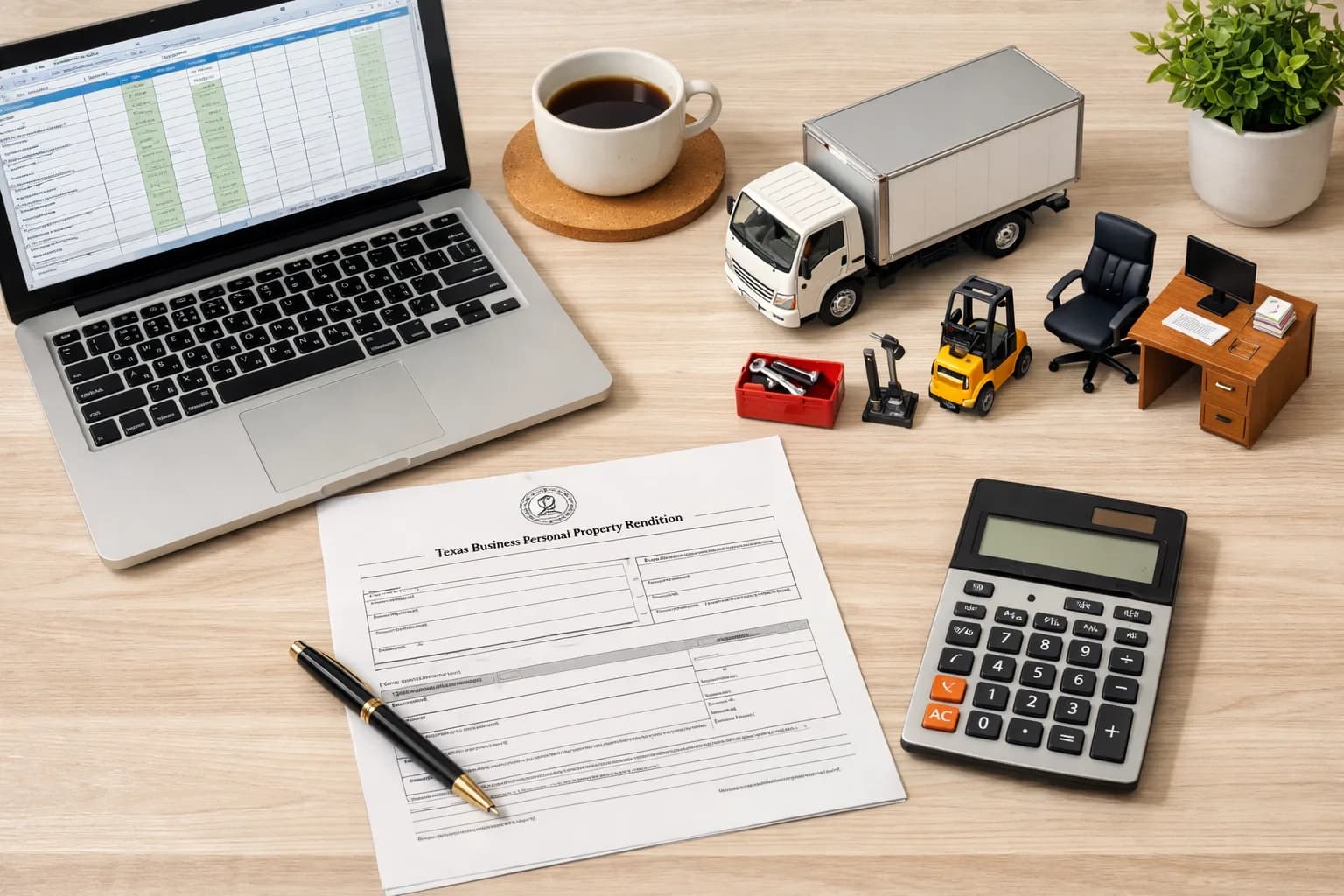
However, businesses in Texas do owe personal property tax on equipment, inventory, and other tangible assets used to produce income. Starting in 2026, the first $125,000 per location is exempt.
- Texas has no personal property tax on vehicles, boats, RVs, or household items for individuals
- Texas does tax business personal property (equipment, inventory, fixtures)
- The BPP exemption increased to $125,000 per location in 2026 (up from $2,500)
- The only property tax most homeowners pay is on their home and land
What Is Personal Property Tax?
Personal property tax is a tax on movable assets - things that are not permanently attached to land. This is different from real property tax, which covers land and permanent structures like your home.
Personal property generally falls into two categories:
| Type | Examples | Taxed in Texas? |
|---|---|---|
| Tangible personal property (individuals) | Cars, trucks, boats, RVs, motorcycles, furniture, jewelry | No |
| Business personal property | Equipment, machinery, inventory, computers, furniture, fixtures, supplies | Yes |
Many states tax both categories. Texas only taxes business personal property - not personal items owned by individuals.
What Texas Does and Doesn't Tax
Here's a complete breakdown of what Texas homeowners and individuals do and don't owe property tax on:
Not Taxed (Individuals)
- Vehicles - no annual property tax on cars, trucks, or motorcycles. You pay a one-time 6.25% sales tax at purchase and an annual registration fee, but no recurring value-based tax.
- Boats and RVs - no personal property tax. Sales tax applies at purchase only.
- Household items - furniture, electronics, appliances, clothing, and other personal belongings are not taxed.
- Jewelry and collectibles - not subject to property tax.
Taxed (Everyone)
- Your home and land - annual property tax based on appraised value. This is the main property tax Texas homeowners deal with.
- Commercial real estate - office buildings, retail space, warehouses, vacant land held for investment. See how to protest commercial property taxes.
- Business personal property - tangible assets used to produce income (see below).
How Texas Compares to Other States
In states like Virginia, Connecticut, and Rhode Island, homeowners pay an annual personal property tax on their vehicles based on the vehicle's assessed value. A car worth $30,000 in Virginia might cost $700–$1,000 per year in personal property tax - on top of real estate taxes.
Texas homeowners don't face this. The tradeoff is that Texas has higher real property tax rates than many states, partly because property taxes are the primary revenue source for local governments in a state with no income tax.
Business Personal Property Tax in Texas
While individuals don't owe personal property tax, Texas businesses do. Business personal property (BPP) includes tangible assets used to produce income:
- Office furniture and fixtures
- Computers, printers, and IT equipment
- Manufacturing equipment and machinery
- Inventory and raw materials
- Vehicles used for business purposes
- Tools and supplies
BPP is taxed at the same rates as real property by the same local taxing entities (school districts, counties, cities, and special districts).
How BPP Is Assessed
Businesses must file an annual rendition (Form 50-144) with their county appraisal district by April 15 each year. The rendition lists all taxable business personal property and its value as of January 1.
You can report the property at:
- Original cost minus depreciation (most common method)
- Market value (what the property would sell for)
- Other recognized valuation methods
The appraisal district reviews the rendition and may adjust values. You have the right to protest the appraised value of your BPP, just like you can protest your home's value.
The $125,000 BPP Exemption (New for 2026)
In November 2025, Texas voters approved Proposition 9, which raised the business personal property exemption from $2,500 to $125,000 per location. This took effect January 1, 2026.
What this means for businesses:
| Business Scenario | BPP Value | Tax Owed (Before 2026) | Tax Owed (2026+) |
|---|---|---|---|
| Small office with furniture and computers | $40,000 | Taxed on $37,500 | $0 (fully exempt) |
| Restaurant with kitchen equipment | $90,000 | Taxed on $87,500 | $0 (fully exempt) |
| Retail store with inventory | $200,000 | Taxed on $197,500 | Taxed on $75,000 |
| Warehouse with heavy equipment | $500,000 | Taxed on $497,500 | Taxed on $375,000 |
Key details about the exemption:
- Applies per location - a business with 3 stores can claim three separate $125,000 exemptions
- Covers all types of BPP (equipment, inventory, furniture, fixtures, supplies)
- You must still file a rendition by April 15, even if you believe your property is fully exempt
- If your total BPP value at a location is $125,000 or less, you owe nothing
For most small businesses - home offices, small retail shops, service businesses with modest equipment - the new exemption effectively eliminates BPP tax entirely.
BPP Rendition Deadlines
| Deadline | Action |
|---|---|
| January 1 | Assessment date - value of BPP is determined as of this date |
| April 15 | Rendition filing deadline (Form 50-144) |
| May 15 | Extended deadline (if you request an extension by April 15) |
| May 15 | Protest deadline for BPP values (or 30 days after notice) |
Late rendition filings can result in a 10% penalty on the taxable value of property not reported on time. If a business fails to render entirely and the CAD discovers the property, the penalty increases to 25%.
How Texas Property Tax Compares Overall
Texas has no income tax and no personal property tax on individuals - so where does the tax burden fall? Primarily on real property.
| Tax Type | Texas | National Average |
|---|---|---|
| State income tax | 0% | ~4.5% |
| Personal property tax (vehicles) | $0 | Varies ($0–$1,000+/year) |
| Sales tax | 6.25% (+ up to 2% local) | ~5.1% state average |
| Real property tax (effective rate) | ~1.36% | ~0.98% |
The tradeoff is clear: Texas homeowners save significantly on income and personal property taxes but pay more on their home. That's why managing your real property tax bill - through exemptions and annual protests - is especially important in Texas.
For a full explanation of how Texas property taxes work, see: How Texas Property Taxes Work.
Frequently Asked Questions
Does Texas have personal property tax on vehicles?
No. Texas does not charge an annual personal property tax on vehicles, boats, RVs, or other personal items for individuals. You pay a one-time 6.25% motor vehicle sales tax when you purchase a vehicle and an annual registration fee, but there is no recurring property tax based on the vehicle's value.
What is business personal property tax in Texas?
Business personal property (BPP) tax is an annual ad valorem tax on tangible assets used to produce income - equipment, machinery, inventory, furniture, fixtures, and supplies. Businesses must file an annual rendition (Form 50-144) with their county appraisal district by April 15, listing the property and its value.
What is the BPP exemption in Texas for 2026?
Starting in 2026, Texas businesses can exempt up to $125,000 of business personal property value per location. This is a major increase from the previous $2,500 threshold. Voters approved this change through Proposition 9 in November 2025. The exemption applies per location, so a business with multiple sites can claim multiple exemptions.
Do you pay personal taxes in Texas?
Texas has no state income tax and no personal property tax on vehicles, boats, or household items for individuals. The main taxes Texans pay are property tax on real estate (homes and land), sales tax (6.25% state + up to 2% local), and federal income tax.
What state has no personal property tax?
Many states do not tax personal property for individuals, including Texas. States like Virginia, Connecticut, and Rhode Island do charge annual personal property taxes on vehicles. Each state has different rules, so the comparison depends on which types of personal property you're asking about.
Can I protest my business personal property value?
Yes. Just like residential property, you can protest the appraised value of your business personal property. The protest deadline is May 15 (or 30 days after your notice is mailed, whichever is later). Common grounds include depreciation not being properly reflected, market value being lower than assessed, or errors in the property description.
Do I still need to file a rendition if my BPP is under $125,000?
Yes. The Texas Comptroller still requires businesses to file a rendition by April 15 even if the total value is below the exemption threshold. Filing confirms that your property qualifies for the exemption. Failure to file can result in penalties.
Lower Your Texas Property Tax Bill
While Texas doesn't tax your personal property, it does tax your home - and at some of the highest rates in the country. Make sure you're not overpaying. Ballard Property Tax Protest files your protest, gathers evidence, and represents you at hearings.
No reduction, no fee.