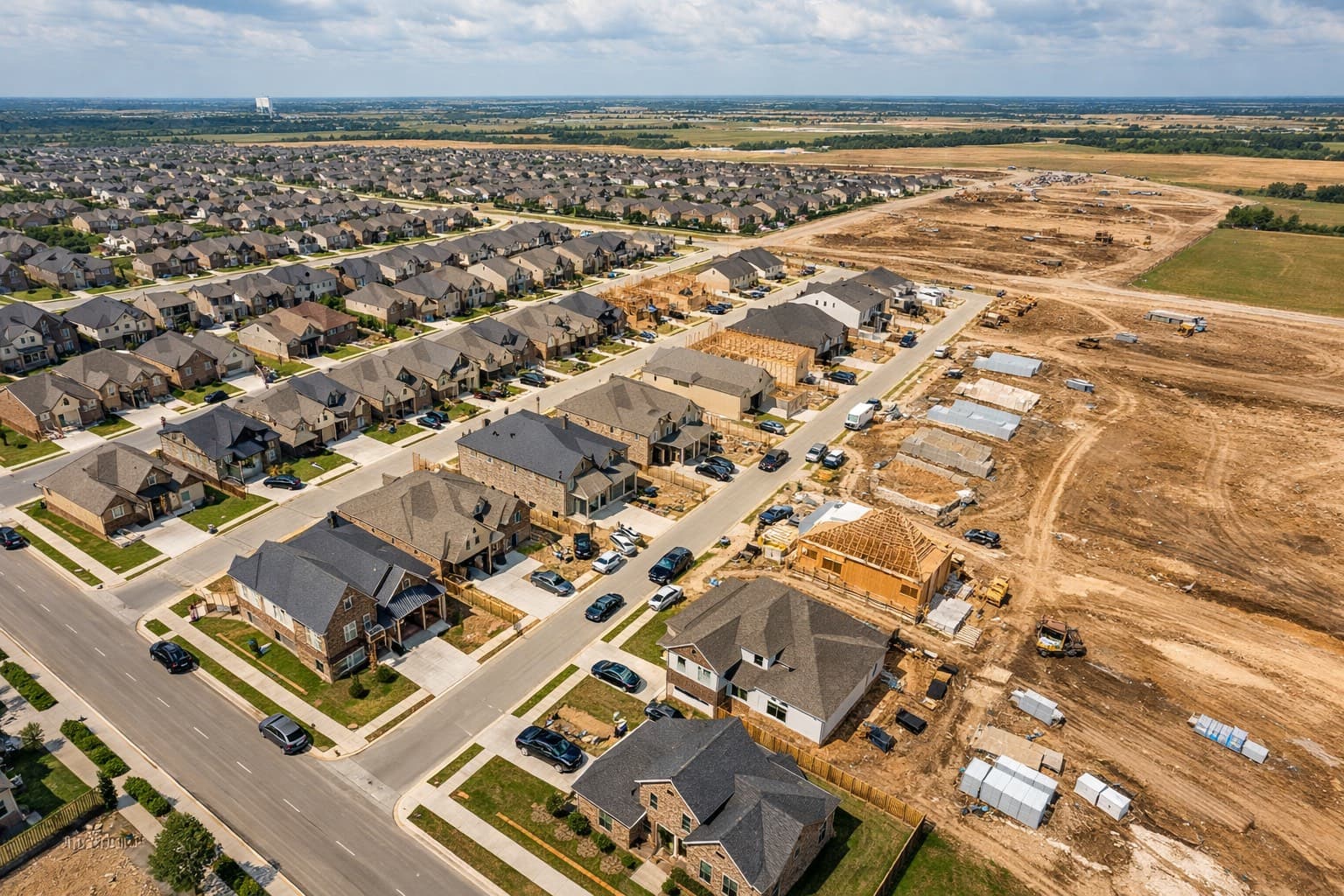
New census data tells a clear story: Texas suburbs are booming, and property tax bills are following right behind.
The U.S. Census Bureau's latest population estimates show that four of the 10 fastest-growing counties in the entire country between 2024 and 2025 are in Texas - all of them suburban counties ringing Houston, Dallas, and Austin. Meanwhile, Dallas County actually lost residents.
If you live in one of these fast-growing areas, your property tax bill is almost certainly going up. Here's why, and what you can do about it.
The Numbers: Texas Suburbs Are Leading the Nation
The census data paints a dramatic picture of where growth is happening:
| County | Metro Area | 2025 Population | Growth Rate | US Ranking |
|---|---|---|---|---|
| Waller County | Houston | 69,858 | 5.7% | #2 in the US |
| Kaufman County | Dallas | ~209,235 | 5.67% | Top 10 |
| Caldwell County | Austin/San Antonio | 54,753 | 4.43% | Top 10 |
| Liberty County | Houston | ~121,364 | 4.36% | Top 10 |
For perspective, the national growth rate is just 0.5%. These Texas counties are growing at 8 to 11 times that pace.
Texas overall added 391,243 residents in a single year, pushing past 31 million. But that growth isn't landing in downtown Dallas or central Houston - it's flowing into the suburbs and exurbs surrounding those cities.
Dallas County lost 2,616 residents between 2024 and 2025, shedding more than 21,000 through outward migration alone. Where are those people going? Counties like Kaufman, just 30 miles southeast.
Why Suburban Growth Drives Up Your Property Taxes
In Texas, property taxes fund virtually everything - schools, roads, police, fire departments, parks. There is no state income tax to share the load. So when thousands of new residents arrive in a county, the financial pressure on local services is enormous.
But the more immediate impact on your wallet comes from what all those new residents do to home values.
Here's the cycle:
- People move to the suburbs seeking affordable housing
- Increased demand pushes home prices higher
- New construction sells at premium prices, establishing high comparable sales
- Appraisal districts use those sales to value every home in the area
- Your appraised value goes up - and so does your tax bill
This cycle hits especially hard in Texas because appraisal districts use mass appraisal methods. They don't inspect every home individually. Instead, they look at what homes are selling for in your neighborhood and apply those values broadly. When new-build homes sell for $350,000 to $400,000 on your street, your 10-year-old home gets pulled up to match - even if it needs a new roof and has dated finishes.
The statewide numbers confirm this: Texas property taxes hit a record $125.05 billion in 2024, up from just $49 billion a decade earlier - a 160% increase driven largely by rising home values in growing suburbs.
Kaufman County: A Case Study in Growth and Rising Taxes
Kaufman County may be the clearest example of how suburban growth translates to higher property tax bills.
In 2020, the county had 145,310 residents. By 2025, that number has surged past 209,000 - a 44% increase in five years. The city of Forney alone has nearly doubled, growing from about 24,000 residents in 2020 to over 41,000 today, with an annual growth rate above 8%.
That growth has been great for the local economy. But it has also pushed property values - and tax bills - sharply higher:
- Median home value in Forney: $355,007
- Median annual property tax bill in Forney: $6,744
- Kaufman County effective tax rate: 1.74% (36% above the Texas average)
The irony is that tax rates in Kaufman County have actually decreased - the county rate dropped about 20% between 2020 and 2025. Forney ISD cut its rate for five consecutive years. But rising appraised values have more than offset those cuts. Homeowners are paying more even as rates go down.
This is exactly the situation where protesting your property taxes makes the most difference.
The Other Boom Counties
Waller County (Houston area) - The #2 fastest-growing county in the entire nation. A Tesla Megapack facility is bringing roughly 1,500 manufacturing jobs, and developers have plans for approximately 50,000 new homes. The county's population could double within 5 to 8 years.
Liberty County (Houston area) - Growing at 4.36%, with 85% of that growth coming from people relocating from elsewhere. Cheaper land prices and remote work flexibility are the primary drivers.
Caldwell County (between Austin and San Antonio) - Growing at 4.43%, with 87% of growth from domestic migration. The county seat of Lockhart and surrounding communities are absorbing residents priced out of Austin.
Each of these counties faces the same dynamic: rapid growth creating infrastructure demands funded by property taxes, while rising home values push assessments higher.
The Other Side: What Happens When People Leave
The same census data that shows suburban counties booming also shows urban cores losing residents. Dallas County lost over 21,000 people to outward migration in a single year. That shift creates a different kind of property tax problem - and a different kind of opportunity.
When residents leave an area, demand for housing drops. Fewer buyers means homes sit on the market longer, sale prices soften, and neighborhood desirability can decline. But appraisal districts are often slow to reflect these downward trends. They're built to capture rising values, not falling ones.
If you live in a county or neighborhood losing population, your home may be appraised above what the market actually supports. Here's why that matters:
Declining sales prices strengthen your protest case. If recent comparable sales in your area show lower prices than what the appraisal district has on file, that's direct evidence your assessed value is too high. Fewer bidding wars and longer days-on-market are exactly the kind of market data that wins at informal hearings and ARB panels.
Vacancy and turnover weaken neighborhood values. When homes sit vacant or rental turnover increases, the condition and appeal of a neighborhood can slip. Appraisal districts may not account for these quality-of-life changes in their mass appraisal models, leaving your assessment anchored to values from when the area was more desirable.
Infrastructure strain works in your favor too. Declining tax bases mean cities and counties may defer road maintenance, reduce services, or close facilities. These factors legitimately reduce your property's market value and can be cited in a protest.
Dallas County homeowners in particular should take note. The county's population has declined for consecutive years while surrounding suburbs absorb its former residents. If your neighborhood is seeing more "For Sale" signs and fewer offers, your appraisal should reflect that reality. If it doesn't, you have a strong case.
The bottom line for declining areas: Appraisal districts are quick to raise values when markets heat up but slow to lower them when markets cool. That asymmetry is exactly what the protest process exists to correct.
Why Fast-Growth Homeowners Are Most Likely to Be Over-Assessed
If you live in a rapidly growing suburb, your risk of being over-assessed is higher than average. Here's why:
New construction skews the comps. Appraisal districts rely on recent sales data. In growing areas, a large share of recent sales are brand-new homes selling at premium prices. Your existing home gets compared against these new builds, even though new construction commands a price premium that doesn't apply to older homes.
Mass appraisal can't keep up. When a neighborhood grows from 500 homes to 2,000 homes in three years, the appraisal district is applying values based on broad market trends rather than individual property conditions. Homes that need repairs, have smaller lots, or lack upgrades get swept up in the same rising tide.
Rapid price changes create assessment lag. In fast-moving markets, appraisal districts may overcorrect - applying value increases based on last year's peak sales even as the market moderates.
What You Should Do Now
If you live in Kaufman County, Waller County, or any fast-growing Texas suburb, here's your playbook:
1. Watch for your appraisal notice. Texas appraisal districts mail notices in April. This notice shows your property's new appraised value for the year. Compare it to what your home would actually sell for today - not what the newest home on your block sold for.
2. File a protest by May 15. The deadline to protest your property tax appraisal is May 15 (or 30 days after receiving your notice, whichever is later). You do not need a reason to protest - you just need to file on time.
3. Gather evidence that your home is different from new construction. Older homes, deferred maintenance, smaller square footage, less desirable lot positions - all of these are valid reasons your home should be assessed below what new builds are selling for.
4. Consider professional help. In fast-growing counties where values are shifting rapidly, appraisal districts are dealing with massive caseloads and complex market data. A professional property tax consultant knows how to build a case using comparable sales that actually match your home.
The Bottom Line
Whether you're in a booming suburb where new construction is inflating your appraisal, or in an urban core where population decline means your home is worth less than the district claims - the math works in your favor when you protest.
Appraisal districts are built to capture rising values quickly but are slow to reflect declines. That asymmetry is the single biggest reason to file a protest every year, regardless of which side of the growth trend you're on.
Filing a protest is free, there's no risk of your value going up, and the success rates across Texas are strong.
If you're in Kaufman County or any of the 18 Texas counties we serve, sign up for a free property tax protest and we'll handle the entire process. No upfront fees - you only pay if we reduce your taxes.
Appraisal notices are coming. The May 15 deadline is closer than you think.